
Will Homeowners Insurance Pay for a New Roof in Alabama?
Quick answer: Homeowners insurance typically covers roof replacement in Alabama when damage results from a covered peril such as hail, wind, tornadoes, fire, or falling trees. Damage caused by age, wear and tear, or neglect is not covered. Filing promptly, documenting thoroughly, and working with a licensed local contractor gives you the strongest chance of a successful claim.
North Alabama homeowners know the feeling. A storm rolls through Huntsville or Decatur overnight, and by morning you are standing in your yard squinting up at your shingles, wondering what the storm left behind. Hail damage. Wind-lifted edges. A section where a tree limb came down hard.
The next question that follows is almost always the same: will my homeowners insurance pay for this?
For most homeowners, a roof replacement is one of the most significant expenses they will face. Understanding what your policy covers before a storm hits, or knowing how to move quickly after one, can be the difference between a manageable claim and a financial setback. This guide breaks down what Alabama homeowners need to know about insurance coverage for roof replacement, how the claims process works, and why the contractor you choose matters more than most people realize.
Does Homeowners Insurance Cover Roof Replacement in Alabama?
Yes, in most cases, but only when the damage was caused by a covered peril. According to the Alabama Department of Insurance, your insurer is obligated to pay for repair or replacement of roof damage caused by a covered event. The critical word in every policy is "sudden." Insurance is designed to protect you from unexpected, abrupt damage, not from gradual wear or deferred maintenance.
Alabama's geographic position in what meteorologists call "Dixie Alley" creates storm conditions that frequently trigger covered claims. Severe hailstorms, straight-line winds, tornadoes, and falling trees are a regular part of life across Huntsville, Athens, Cullman, Decatur, and Albertville. Each of these events can cause the kind of sudden, documented damage that most standard homeowners policies are built to cover.
Alabama homeowners pay around $4,123 annually for homeowners insurance, nearly $1,700 above the national average, according to claims data analyzed by regional roofing contractors. Understanding what you are paying for gives you the confidence to file a legitimate claim without hesitation.
What Types of Roof Damage Are Covered in Alabama?
Standard homeowners insurance in Alabama typically covers roof damage from the following causes:
- Hail damage: Hailstones strip protective granules from shingles, bruise the underlying mat, and create vulnerabilities that lead to premature failure. Even when a roof is not actively leaking after a hailstorm, the structural integrity may already be compromised.
- Wind damage: High winds lift shingle edges, crease shingles at the nail line, tear off ridge caps, and can remove shingles entirely from slopes facing the storm's direction.
- Tornadoes and straight-line winds: Both are common across North Alabama and frequently result in significant structural damage that qualifies for coverage.
- Falling trees and tree limbs: A tree brought down by wind or ice onto your roof is considered a covered peril under most policies. If you have storm-damaged trees near your home that pose a risk, Mack Roofing's tree service can assess and remove hazardous trees before they become a claim.
- Fire and lightning: Roof damage caused by a lightning strike or fire is covered under virtually all standard homeowners policies.
One important exclusion worth noting: standard homeowners insurance does not cover flood damage. Water that enters your home because of rising flood levels requires a separate policy through the National Flood Insurance Program.
What Roof Damage Is NOT Covered by Homeowners Insurance?
Knowing what your policy excludes saves you the frustration of filing a claim that will be denied. The following types of damage are typically not covered:
- Age and normal wear and tear: Shingles that have simply reached the end of their lifespan do not qualify as a covered loss, regardless of how the damage looks.
- Neglect and poor maintenance: Clogged or damaged gutters, rotting wood, and cracked flashing that were never addressed signal to adjusters that the homeowner failed to maintain the property. Keeping your gutters clean and functional is a simple maintenance step that protects your coverage eligibility.
- Pre-existing damage: Adjusters are trained to identify damage that predates the storm you are claiming. Damage from previous storms that was never repaired can jeopardize your current claim.
- Manufacturer defects: A faulty roofing product is a warranty issue, not an insurance matter.
Understanding ACV vs. RCV: Why Your Policy Type Changes Everything
Before you file any claim, you need to understand whether your policy pays Actual Cash Value (ACV) or Replacement Cost Value (RCV). This distinction alone can mean a difference of thousands of dollars.
Replacement Cost Value (RCV) covers what it actually costs to replace your roof with comparable materials at today's prices, minus your deductible. If your roof replacement costs $18,000 and your deductible is $2,000, your insurer pays $16,000.
Actual Cash Value (ACV) deducts depreciation based on your roof's age. A 15-year-old roof that would cost $18,000 to replace might only net you $6,000 after depreciation, leaving you responsible for the remaining $12,000 plus your deductible.
Many Alabama insurers automatically switch to ACV coverage once a roof exceeds 15 to 20 years of age. Some RCV policies hold back depreciation until you complete the work, meaning you receive a first payment and then recover the held amount after your contractor submits completion photos. Pull out your policy's declarations page now and look for these terms before the next storm season arrives.
Alabama policies also commonly include a separate wind and hail deductible, sometimes 2% to 5% of your dwelling coverage rather than your standard flat deductible. On a $300,000 home, that translates to a $6,000 to $15,000 deductible for storm damage alone. Knowing this figure helps you make an informed decision about whether to file.
How to File a Roof Insurance Claim in Alabama: Step by Step
Step 1: Document damage before anything else
Take clear photos and short videos of all visible damage from the ground immediately after the storm. Capture your roof, gutters, siding, and any interior water stains. Date-stamped photos from your phone serve as valuable evidence when you file. Do not climb onto a damaged roof yourself.
Step 2: Make temporary repairs to prevent further loss
Cover exposed areas with tarps if it is safe to do so. Alabama homeowners insurance policies require policyholders to take reasonable steps to prevent additional damage after a loss. Keep all receipts for temporary protective measures, as most policies reimburse these costs.
Step 3: Contact your insurance company promptly
According to Alabama Department of Insurance guidelines, your insurer must acknowledge your claim within 15 days and accept or deny it within 30 days of receiving a complete proof of loss. Alabama does not set a specific statutory filing deadline, but most policies require you to report damage promptly, typically within one year of the event. Filing within days of a storm gives you the clearest connection between the damage and the covered peril. Waiting weakens your case.
Step 4: Schedule a professional inspection before the adjuster arrives
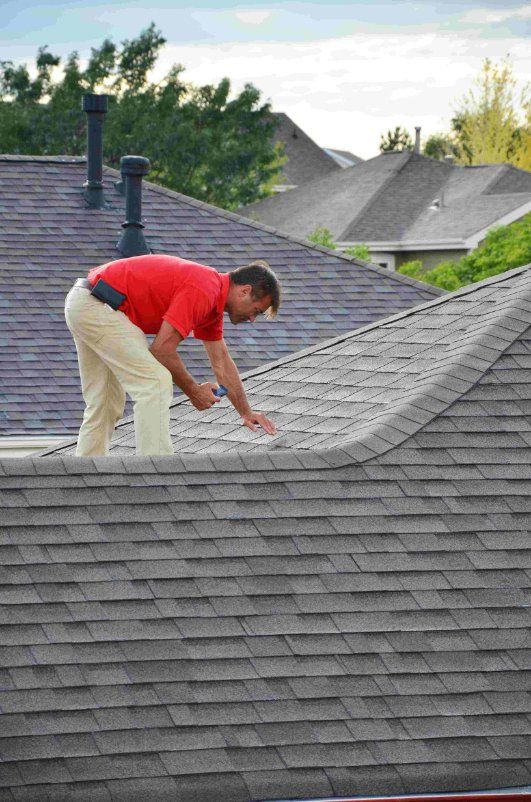
A licensed roofing contractor can identify damage that adjusters may overlook or undervalue. The roofing team at Mack Roofing provides free storm damage inspections throughout Huntsville, Athens, Cullman, Decatur, and Albertville. Getting a written contractor report in hand before your adjuster meeting gives you documentation that supports your claim from the start.
Step 5: Have your contractor present during the adjuster inspection
Scheduling your adjuster meeting when your roofing contractor can also attend means someone familiar with North Alabama building codes and storm damage patterns can point out damage the adjuster might miss. Adjuster meetings go better when a qualified contractor can explain specific findings and reference local code requirements.
Step 6: Review the adjuster's report carefully
Compare the insurance company's estimate to your contractor's findings line by line. Estimates sometimes miss entire roof sections, use outdated material pricing, or exclude required flashing upgrades under current Alabama building codes. If gaps exist, your inspector can help you request a re-evaluation.
Common Reasons Roof Claims Get Denied in Alabama
Understanding why claims get denied helps you avoid those mistakes or push back when a denial is not justified:
- Late reporting: Waiting too long gives carriers grounds to question whether damage came from the covered storm or from subsequent weather.
- Wear and tear determination: Adjusters may attribute damage to age or poor maintenance rather than storm impact.
- Lack of documentation: Missing photos, no contractor inspection, or no proof linking damage to a specific storm date are common grounds for denial.
- Age limitations: Roofs over 15 to 20 years old may trigger automatic depreciation or coverage exclusions depending on your policy.
- Pre-existing damage: Older unrepaired damage from previous storms can be used to reduce or deny your current claim.
If your claim is denied, request the denial letter in writing and review it carefully against your actual policy language. A detailed contractor report showing storm-specific damage patterns, as opposed to gradual aging, frequently provides the evidence needed to overturn an initial denial.
Should You Repair or Replace After Storm Damage?
Minor damage from a single event, such as a few lifted shingles, may justify a repair rather than full replacement. Mack Roofing believes in transparent recommendations: if repairs are all that your roof needs, that is what the team will tell you. No upselling. No unnecessary work.
Full roof replacement becomes the right call when hail damage affects more than a threshold percentage of the total roof surface, when wind damage has compromised structural integrity across multiple slopes, or when a roof is over 20 years old with widespread deterioration. Insurance adjusters assess necessity based on documented damage extent. Having your contractor's detailed written report ready gives adjusters the clearest possible picture.
Does Filing a Roof Claim Raise Your Premiums in Alabama?
Filing a legitimate storm damage claim typically has less premium impact than liability or water damage claims. According to national insurance rate analysis from The Zebra, a wind or hail claim raises premiums by roughly 7 to 10% on average, though every insurer is different. Multiple claims within a few years carry more risk of significant rate changes than a single event.
The general principle: if the repair cost is close to or below your deductible, paying out of pocket may be the smarter move. For significant storm damage well above your deductible, filing almost always makes financial sense even with a temporary rate adjustment.
Why Working with a Local Licensed Contractor Matters
Alabama law allows you to choose any licensed roofing contractor you want. Your insurance company cannot require you to use their preferred vendors. Working with a licensed local contractor who knows North Alabama building codes and the insurance claims process consistently leads to better outcomes than using out-of-state storm chasers who have no local accountability.
Mack Roofing holds Home Builders License #27594, is BBB Accredited, and has 20 years of experience serving North Alabama homeowners and commercial property owners. The team manages direct communication with insurance companies on behalf of clients, handles documentation and adjuster coordination, and provides complete exterior restoration services including siding, windows, gutters, and decks and fences when storm damage extends beyond the roof.
Verify that any contractor you hire is licensed by the Alabama Home Builders Licensure Board before signing any agreement.
Get Your Roof Inspected Before You Call Your Insurance Company
The smartest move any North Alabama homeowner can make after a storm is to call a trusted local contractor before contacting their insurer. A professional inspection gives you documented evidence, a written estimate, and a clear understanding of what you are working with before any adjuster sets foot on your property.
Mack Roofing offers free roof inspections across Huntsville, Athens, Cullman, Decatur, Albertville, and surrounding North Alabama communities. Call (256) 788-5423 to schedule yours today, or fill out our form to request an estimate. You pay premiums to protect your home. When storm damage happens, make sure you get the coverage you have earned.
Frequently Asked Questions
Does homeowners insurance cover roof replacement in Alabama if my roof is over 20 years old?
Coverage depends on your specific policy. Some Alabama policies provide full replacement cost value coverage regardless of roof age. Others switch to actual cash value, which accounts for depreciation, once a roof exceeds 15 to 20 years. Even with depreciation, a storm damage claim on an older roof can still result in meaningful coverage, though your out-of-pocket cost will be higher. Review your policy's declarations page or call your agent directly to confirm which coverage type applies.
How long do I have to file a roof insurance claim in Alabama?
Alabama does not set a fixed statutory filing deadline for property insurance claims. The timeline is governed by your individual policy, which commonly requires you to report damage within one year of the storm event. Some policies use language requiring "prompt" reporting. The practical answer is to file within days of a storm, not weeks or months. Evidence degrades, and delays give insurers grounds to question whether damage came from the covered event.
Will my homeowners insurance rates go up if I file a roof claim in Alabama?
Possibly, but the increase is typically modest for a single weather-related claim. National data from The Zebra suggests wind and hail claims raise premiums by roughly 7 to 10% on average. Multiple claims within a short period carry more impact. For significant storm damage well above your deductible, filing is almost always the right financial decision despite the potential for a temporary rate adjustment.
What is the difference between ACV and RCV coverage for a roof claim?
Actual Cash Value (ACV) deducts depreciation from your payout based on your roof's age. Replacement Cost Value (RCV) pays the full cost to replace your roof with comparable materials at current prices, minus your deductible. RCV policies deliver significantly higher payouts for older roofs. Many Alabama insurers apply ACV to roofs over 15 to 20 years old automatically.
Can I choose my own roofing contractor for an insurance claim in Alabama?
Yes. Alabama law and insurance regulations give you the right to select any licensed roofing contractor you choose. Insurance companies may suggest preferred vendors, but they cannot require you to use them. Choosing a licensed local contractor familiar with North Alabama building codes and insurance processes leads to more thorough documentation and better claim outcomes.
What should I do if my roof insurance claim is denied in Alabama?
Request the denial letter in writing and compare it against your actual policy language. Work with your roofing contractor to provide additional documentation that shows storm-specific damage patterns rather than normal aging. A second adjuster inspection with stronger photographic evidence sometimes leads to approval. In cases involving large claim amounts or repeated underpayments, a licensed public adjuster or insurance attorney may be appropriate.